


Cooley Innocence Project 25th Anniversary
Cooley Law School will host a 25th Anniversary Gala honoring the legacy and impact of the Cooley Innocence Project on Sat, Sept 19, 2026, at Grewal Hall in Lansing, Michigan.
Read More
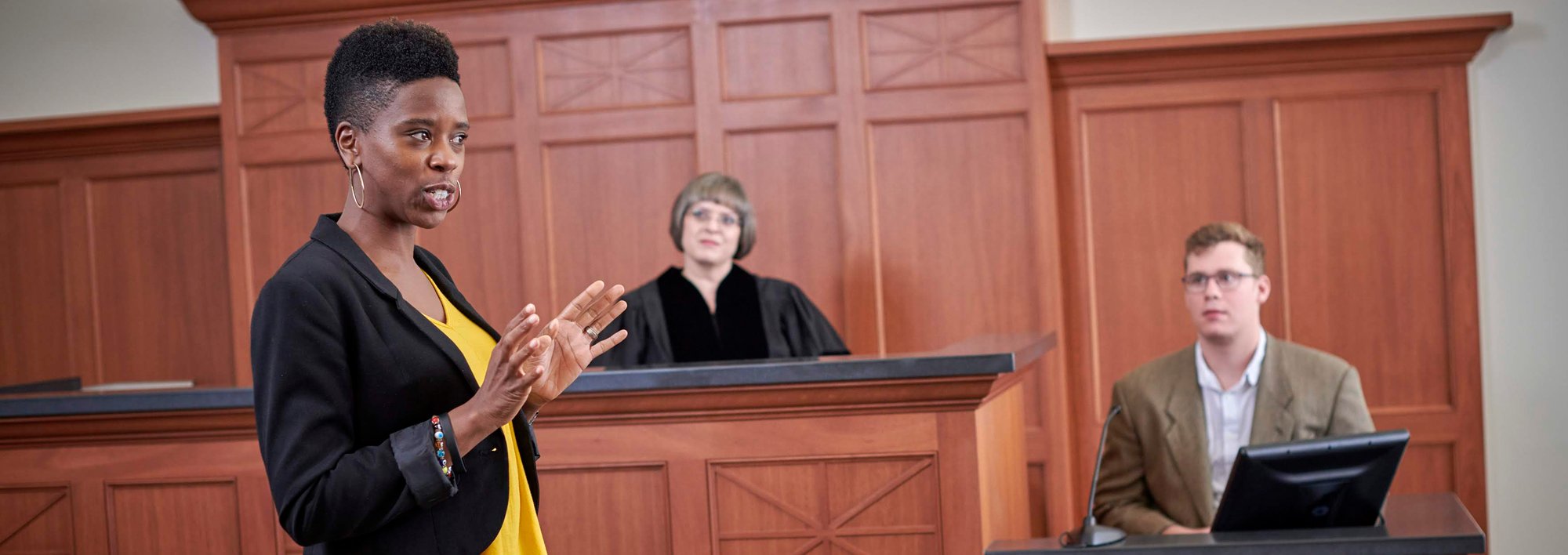
Cooley Law School’s Criminal Law Program is structured to build career-ready skills through a strong academic foundation followed by focused, practice-driven electives.
During the first year, students complete foundational coursework that establishes core legal knowledge and analytical skills essential to criminal practice, including Criminal Law, Criminal Procedure, Evidence, and Constitutional Law. These courses provide the framework for understanding due process, courtroom procedure, evidentiary standards, and the constitutional principles that shape the criminal justice system.
In the second and third years, students deepen their focus through advanced electives aligned with modern criminal practice. Courses such as Electronic Discovery, Legal Ethics in a Digital Space, Domestic Violence, and Immigration Law allow students to explore emerging legal issues, refine litigation strategy, and understand the broader social and technological context of criminal cases.
This progression from foundational doctrine to specialized, forward-looking coursework ensures graduates are prepared to navigate today’s complex and evolving criminal justice landscape with confidence.
Explore the core courses, advanced electives, clinics, and externships that help you build practical skills and apply criminal law principles in real-world settings. Cooley’s combination of rigorous academics and hands-on experience prepares you for confident, career-ready practice.

Connect with peers, practitioners, and mentors through student organizations, competition teams, and networking opportunities focused on criminal law. These groups strengthen your professional development and expand your legal community.
Learn from faculty with real-world experience in prosecution, defense, judicial service, and policy who bring practical insight and mentorship into every course.
Discover how alumni practicing in criminal law support a strong professional network, while dedicated career services help you prepare for employment and long-term success. From resume development to interview preparation, your career readiness remains a priority.
Stay informed about program awards, hosted events, guest speakers, and student achievements that highlight the Criminal Law program’s recognition, leadership, and active engagement within the legal community.
Cooley Law School will host a 25th Anniversary Gala honoring the legacy and impact of the Cooley Innocence Project on Sat, Sept 19, 2026, at Grewal Hall in Lansing, Michigan.
Read More
Recent Cooley Law School graduate Aimee Lorencz is turning years of professional experience and a passion for justice into a future career in criminal law. In a feature published...
Read MoreMost students begin focusing on criminal law electives during their second and third years after completing foundational first-year courses such as Criminal Law, Criminal Procedure, Evidence, and Constitutional Law.
A criminal law focus can prepare graduates for careers as prosecutors, public defenders, criminal defense attorneys, judicial clerks, compliance professionals, government agencies, JAG, non-profits, and policy advocates.
No. The litigation, research, writing, and advocacy skills developed through criminal law coursework are transferable to many other practice areas.
Students may participate in clinics, externships, trial advocacy courses, and other experiential learning opportunities that provide practical courtroom and client experience.
No prior experience is required; the first-year curriculum provides the foundational knowledge necessary to pursue advanced criminal law coursework.
Courses such as Criminal Law, Criminal Procedure, and Evidence cover subjects commonly tested on the bar exam and reinforce core legal principles.
Yes. Many students pair criminal law with related areas such as constitutional law, immigration law, trial advocacy, or public interest law to broaden their professional opportunities.
Contact Admissions to learn how you can build a future-ready career in criminal law and explore how this focus fits into your J.D. path.