Skip to content

Cooley Law School Holds Spring Commencement for Lansing Campus

Cooley Law School Holds Spring Commencement for Lansing Campus

LANSING, Mich. – Cooley Law School’s spring commencement ceremony on April 25 not only honored the 46 graduates who earned their juris doctor degree, but also celebrated 50 years since the law school’s first class earned their degrees. The ceremony, held at the MSU Wharton Center Pasant Theatre in East Lansing, featured remarks from Cooley graduates who celebrated their achievements 50 years apart. Chosen by his peers, 2026 graduate Nicholas Prowse gave the class farewell remarks, while Distinguished Professor Emeritus Jeff Swartz, a former Miami-Dade County, Fla., judge who graduated from Cooley in 1976, delivered the keynote speech. “The easy path has always been to quit or to cut corners or to do the bare minimum to avoid scrutiny. But that is not what we came to law school for, and that is not who any of us who are about to receive our degrees are. Not anymore,” Prowse told his fellow graduates. “If there are two things I’d like to leave everyone with, it’s 1: We have all already proven that we can do incredibly difficult things. Let’s not forget that. It matters most, and it becomes tempting to take the easier path. And 2: let us not forget who was with us along the way.” Prowse thanked his fellow students, friends and family of the graduates, and Cooley professors and faculty. He added, “Remember the professors who invested in us when we inevitably have the opportunity to invest in somebody else. We have all seen first-hand the impact that can have. Let us pay it forward.” During the ceremony, Cooley Law School President and Dean James McGrath presented five members of the 1976 graduating class with commemorative medallions, dubbing them “Golden Graduates.” Those Golden Graduates included: Swartz, Larry Nolan, Jared Silberman, William Ferrigan, and James Bonfiglio. Swartz spoke about Cooley’s impact on his extensive and successful career in law, while connecting his experience back to this year’s graduating class, finding one’s calling, and modern legal integrity. “To be a lawyer right now is to constantly ask yourself, how do I make sure I’m doing the right thing? Am I standing on the right side of history? There is a simple answer: The wrong side of history will always tell you to be afraid. The right side of history will always expect you to be brave,” said Swartz. “I implore you to be brave – as lawyers and as defenders of the constitution. I urge you to go out into this world with courage. The people of this country expect you to be true to the legacy of the very mission, duty, and calling you accept today.” Since opening its doors in 1972 under the leadership of then Michigan Supreme Court Justice Thomas J. Brennan, Cooley Law School has remained committed to providing a rigorous and hands-on legal education that is inclusive and collaborative, preparing students who are confident and future-ready for a career in law. President and Dean McGrath thanked staff and students, as well as those who supported them throughout the school year. He noted that April 25 was also World Healing Day, which was established by the Global Consciousness Project to shed light on the possible effects of global consciousness during watershed moments worldwide. In his remarks, McGrath explained how this connection relates to law students and the legal profession. “People don’t come to lawyers when things are going well, generally,” said McGrath. “They come when something is broken, whether it’s a contract, or a family, a business, a trust, sometimes a life. They come frightened, sometimes angry, and sometimes already having lost something they cannot get back. And they sit across from you and they trust you with some broken thing, and they ask you to help. The law gives you tools for that. You have procedures, arguments, negotiations, drafting, and advocacy. These can be instruments of repair, of healing. But the tools only work if the person holding them understands that the goal is not always just to win, it’s to resolve. To heal.” The ceremony also honored the late Polly Brennan, who was instrumental in Cooley Law School’s founding with her husband, Michigan Supreme Court Justice Thomas E. Brennan. In Cooley’s early years, Polly registered students herself, and would set up tables and chairs for class before the school had a permanent home. She was presented with an honorary degree in 2022. A tribute and moment of silence was presented by Lawrence Nolan, a 1976 Cooley “Golden Graduate” and personal friend to the Brennans. The full Cooley Law School Lansing campus graduation is available to watch here.

Read More
  • Cooley Law School Moot Court Team Wins Best Brief at Florida Competition

    Cooley Law School Moot Court Team Wins Best Brief at Florida Competition

    RIVERVIEW, FLA. – Cooley Law School’s Moot Court team won the Best Brief award at Florida State University’s Claude Pepper Elder law Moot Court competition, held Nov. 7-9, at FSU College of Law in Tallahassee, Fla. The team consisted of law students from Cooley’s Tampa Bay campus: Gabriella Logiudice, Safa Kudia, and Colby Weron. During the competition, 20 briefs from 20 Moot Court teams were evaluated, including teams from George Washington University, Baylor University, University of Chicago, Chicago-Kent, Stetson, University of California San Francisco, and Texas Tech. Law students from Cooley’s Lansing, Michigan, campus also competed in the competition, including: Arjan Malushi (brief writer), Larry Westcomb, and Jasmin Guillen. The competition does not allow any help from outside sources with anything except the basics of brief writing. Teams could not talk with practitioners or professors about the legal issues raised by the fact pattern. For Cooley, Logiudice was the brief writer on the team, while Kudia and Weron conducted research and spent countless hours debating the structure of each argument. They progressed to the elimination rounds, and faced George Washington University in their elimination round and did not progress. “This competition draws some of the best Moot Court teams from around the country,” said Cooley Law School Professor Christine Zellar Church, who coached the Tampa Bay team. “All of our students learn so much from picking a fact pattern apart, researching the fine points of the law, writing a brief, and then engaging in oral argument with teams from other schools. We are all so proud of the hard work and excellence of our students.” Cooley Law School was founded on a mission of equal access to a legal education and offers admission to a diverse group of qualified applicants across the country. Since the law school's founding in 1972, Cooley has provided a modern legal education to more than 21,000 graduates, teaching the practical skills necessary for a seamless transition from academia to the real world. An independent, non-profit law school, accredited by both the American Bar Association and the Higher Learning Commission of the North Central Association of Colleges and Schools, Cooley holds classes year-round at its Michigan and Florida campuses. Nov 15 2024

  • WMU-Cooley Hosts Presentation by Civil Rights Activist

    WMU-Cooley Hosts Presentation by Civil Rights Activist

    WMU-Cooley Law School hosted civil rights activist Dr. Jerome Reide for the law school’s Social Justice Lunch Hour on June 30. Reide, who serves as the legislative liaison for the Michigan Department of Civil Rights, spoke about a variety of topics, including the need for students to become involved in their community and make society a better place. “We need to continue to make our society more inclusive, more diverse,” said Reide. He also stressed the importance of women’s rights and the need for lawyers to be part of the legislature to help shape policy. “Policy is a pendulum that swings right or left depending upon who's in the White House, Congress, and on the Supreme Court,” he said. A long-time civil rights activist, Reide served as the regional field director for the NAACP from 2009-2020, and was primarily responsible for advocacy management of its Midwestern units. He also served as NAACP’s National Field Operations deputy director, Midwest Region III director, and Special Contribution Fund regional development director. Additionally, Reide served as co-chair, committee member of Individual Rights and Responsibilities within the American Bar Association, and director of the Justice Initiatives Division at the State Bar of Michigan. He also served on the board of directors for the Sugar Law Center and the Beckwith Civil Liberties Fund. As the coordinator of ACLU’s Access to Justice Project, Reide coordinated a national study of landlord tenant courts and published the findings in a public policy report, “Justice: Evicted.” During his time as a consultant with Wayne County Commission’s Ways and Means Committee, he helped convene four annual conferences of governmental, community, corporate and academic policy makers to discuss economic development policy in Greater Detroit-Windsor, and Ontario, Canada. Additionally, Reide coordinated an international trade mission to South Africa to link the jobs, housing, education, arts, and cultural policy initiatives of the Mandela Administration with Detroit's leadership. Reide is a member of the State Bar of Michigan, the U.S. District Court for the Eastern District of Michigan, the U.S. Court of Appeals for the Sixth Circuit, the American Bar Association, and the National Bar Association. He has taught at Bowie State University, Eastern Michigan University, and the State University of New York's Center for Labor Studies. Jul 07 2023

  • Innocence Project Helps Secure the Release of George & Melvin DeJesus
    Innocence Project Helps Secure the Release of George & Melvin DeJesus

    Innocence Project Helps Secure the Release of George & Melvin DeJesus

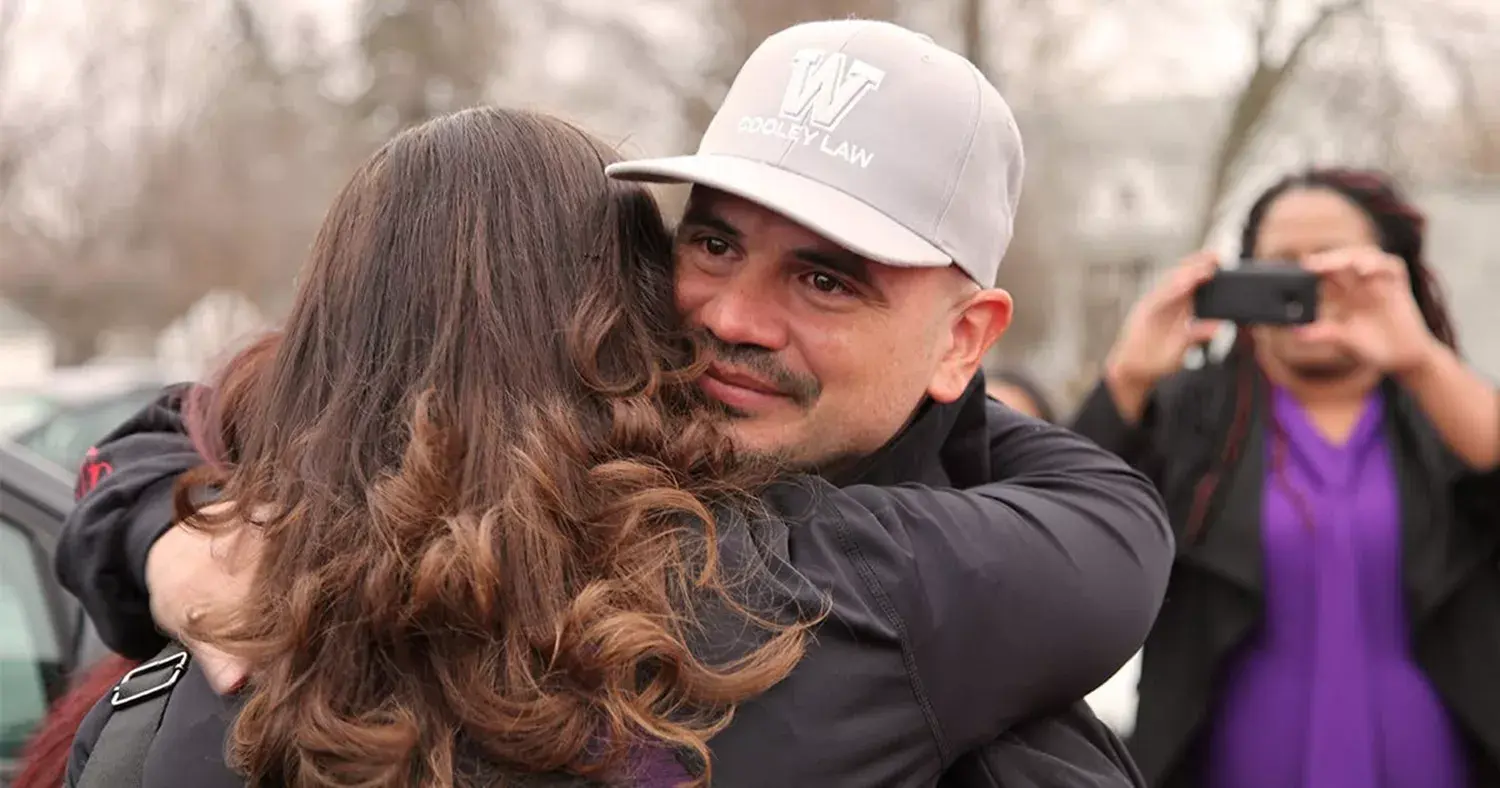
    Today, Oakland County Circuit Court Judge Martha D. Anderson set aside the conviction of George and Melvin DeJesus, who were wrongfully convicted of murder and felony firearms in 1997. “I just want to thank God first, because without him nothing is possible,” said George DeJesus. “I am thankful that the truth is finally realized and hope that our family as well as Margaret’s (victim’s) family can finally heal and put all of this behind us. I realize that justice for my brother and I also means opening up old wounds for the victim’s family. My heart goes out to them and I will be praying for them.” Assistant Attorney General Robyn Frankel, director of the Michigan Attorney General’s Conviction Integrity Unit (CIU) moved to have the DeJesus brothers’ convictions vacated and requested dismissal of all charges. The statewide conviction integrity unit is one of the first of its kind, reviewing claims of innocence in all Michigan counties, except Wayne County, which has its own unit. George DeJesus is represented by Jessica McLemore of the Western Michigan University Cooley Law School Innocence Project (WMU-Cooley Innocence Project). Melvin DeJesus is represented by David Moran of the Michigan Innocence Clinic. The two innocence organizations worked collaboratively with the Attorney General Nessel’s office to finally achieve justice for these two men who served over two decades in prison for crimes they didn’t commit. “We are happy that George can say he has been fully exonerated after nearly a 25-year struggle to prove his innocence,” Tracey Brame, the director of the WMU-Cooley Innocence Project, said. “George has steadfastly maintained that he had nothing to do with this terrible crime. We are grateful to Attorney General Dana Nessel and the Conviction Integrity Unit team for their willingness to listen to the brothers and reinvestigate the case. Today, George and his brother, Melvin, have finally received justice.” On July 11, 1995, a Pontiac woman’s body was found nude in her basement with a pillowcase over her head and wires binding her neck, wrists, and ankles. DNA linked Brandon Gohagen to the crime scene. Gohagen originally told police that the DeJesus brothers had nothing to do with crime. Later, he confessed to sexually assaulting the victim but claimed that Melvin forced him to at gunpoint. Gohagen said that Melvin and George then bound and beat the victim to death. Ultimately, Gohagen pled guilty to second-degree murder and first-degree criminal sexual conduct in exchange for his testimony against the DeJesus brothers. At trial, George and Melvin presented alibi defenses for the night Gohagen said the crime occurred. Nevertheless, the DeJesus brothers were convicted and sentenced to serve life without parole on December 30, 1997. At the request of the WMU-Cooley Innocence Project and the Michigan Innocence Clinic the Attorney General’s CIU reinvestigated the DeJesus brothers’ cases. The CIU interviewed numerous witnesses and reviewed decades of documents. The CIU located witness statements made within weeks of the crime, that corroborated the brothers’ alibis the night of the murder. But they also discovered more troubling facts about Gohagen. In 2017, Gohagen was convicted of the 1994 sexual assault and murder of another woman in Oakland County. Gohagen acted alone in that crime. In addition to the 1994 case, the CIU discovered 12 other women who were emotionally, physically, and sexually abused by Gohagen. The CIU also interviewed a witness who said that Gohagen confessed to implicating the brothers in exchange for a deal. Pretrial and post-conviction DNA testing never identified the brothers’ DNA at the crime scene, and there was no other physical evidence linking the brothers to the crime. “I wish to apologize for the actions taken by your fellow citizens against you 25-years ago. Twenty-five years of your life have been taken from you that cannot be replaced. Hopefully you will find some solace in the fact that you will be able rejoin your family and start living a normal life outside the prison walls. I wish you the best," said Judge Martha D. Anderson, judge for the Sixth Circuit Court in Oakland County, Michigan. Today, George is being released from the Michigan Reformatory in Ionia and will reunite with his brother and family in Lansing at One North Kitchen, 5001 W. Saginaw Hwy., Lansing, MI 48917 at 11 a.m. In 2018, the Department of the Michigan Attorney General received a Post-Conviction DNA Testing of Evidence grant from the Department of Justice to screen claims of innocence and conduct DNA testing in appropriate cases. In 2019 and 2021, the WMU-Cooley Innocence Project received an Upholding the Rule of Law grant from the Department of Justice to review cases in which unreliable forensics played a role in the conviction. Since 2018, the two offices have been partnering on DNA and other forensic casework. About the WMU-Cooley Innocence Project: The WMU-Cooley Law School Innocence Project is part of the Innocence Network, which has been credited with the release of over 375 wrongfully accused prisoners through the use of DNA testing. The WMU-Cooley project has screened over 6,000 cases and is responsible for the exoneration of seven men: Kenneth Wyniemko (2003), Nathaniel Hatchett (2008), Donya Davis (2014) LeDura Watkins (2017) Kenneth Nixon (2021), Gilbert Poole (2021), and Corey McCall (2021). The WMU-Cooley Innocence Project supported the exonerations of Ramon Ward and Lacino Hamilton by contributing its DNA expertise and grant resources to obtain testing. The project is staffed by WMU-Cooley Law School students, who work under the supervision of WMU-Cooley Innocence Project attorneys. If you want to support this project, donate and support the work of the WMU-Cooley Innocence Project. About WMU-Cooley Law School: WMU-Cooley Law School was founded on a mission of equal access to a legal education and offers admission to a diverse group of qualified applicants across the country. Since the law school's founding in 1972, WMU-Cooley has provided a modern legal education to more than 20,000 graduates, teaching the practical skills necessary for a seamless transition from academia to the real world. WMU-Cooley enrolls classes year-round at its Michigan and Florida campuses. WMU-Cooley is an independent, non-profit law school, accredited by both the American Bar Association and the Higher Learning Commission of the North Central Association of Colleges and Schools. Mar 22 2022