Skip to content

Cooley Law School Holds Winter Commencement for Lansing Campus

Cooley Law School Holds Winter Commencement for Lansing Campus

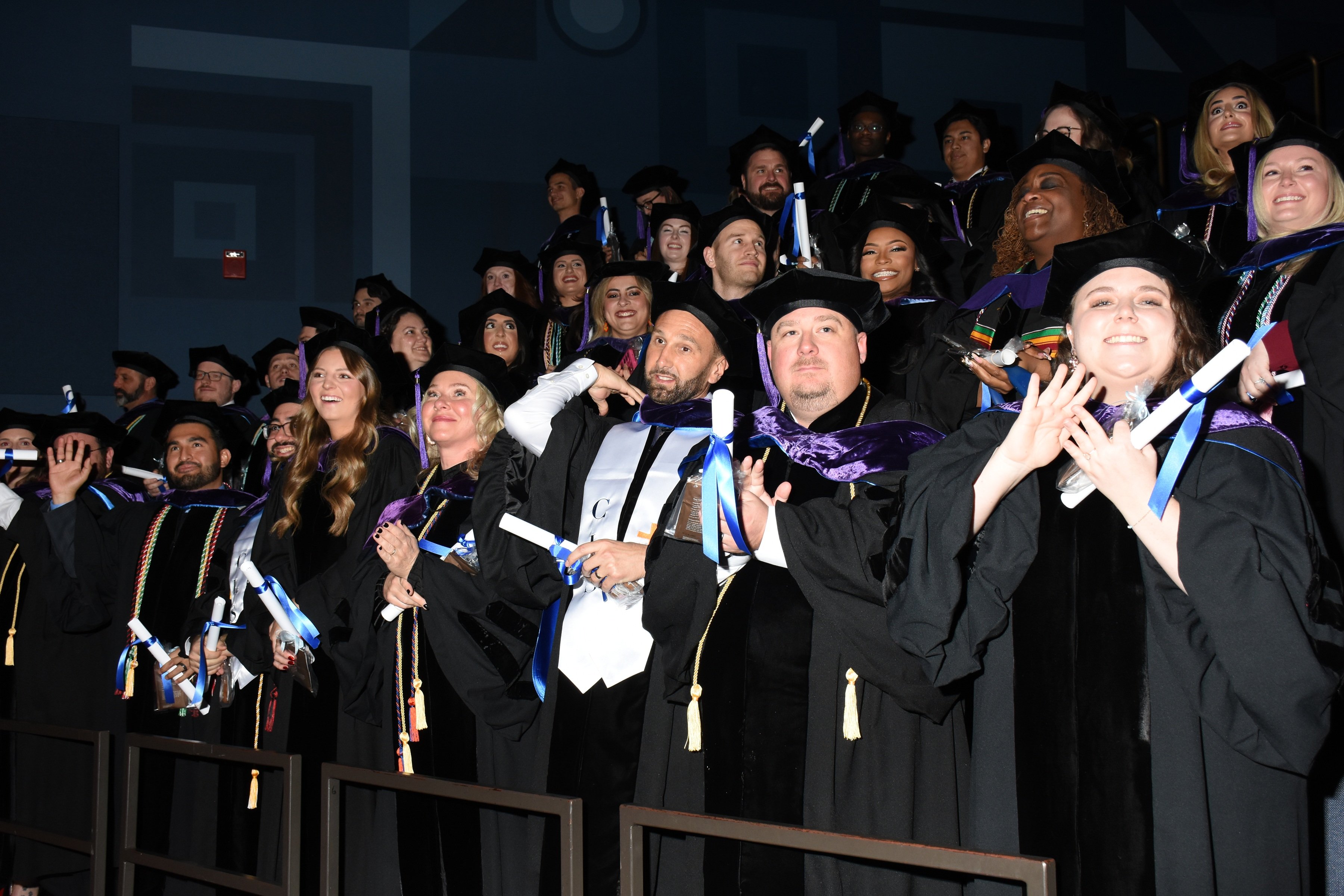
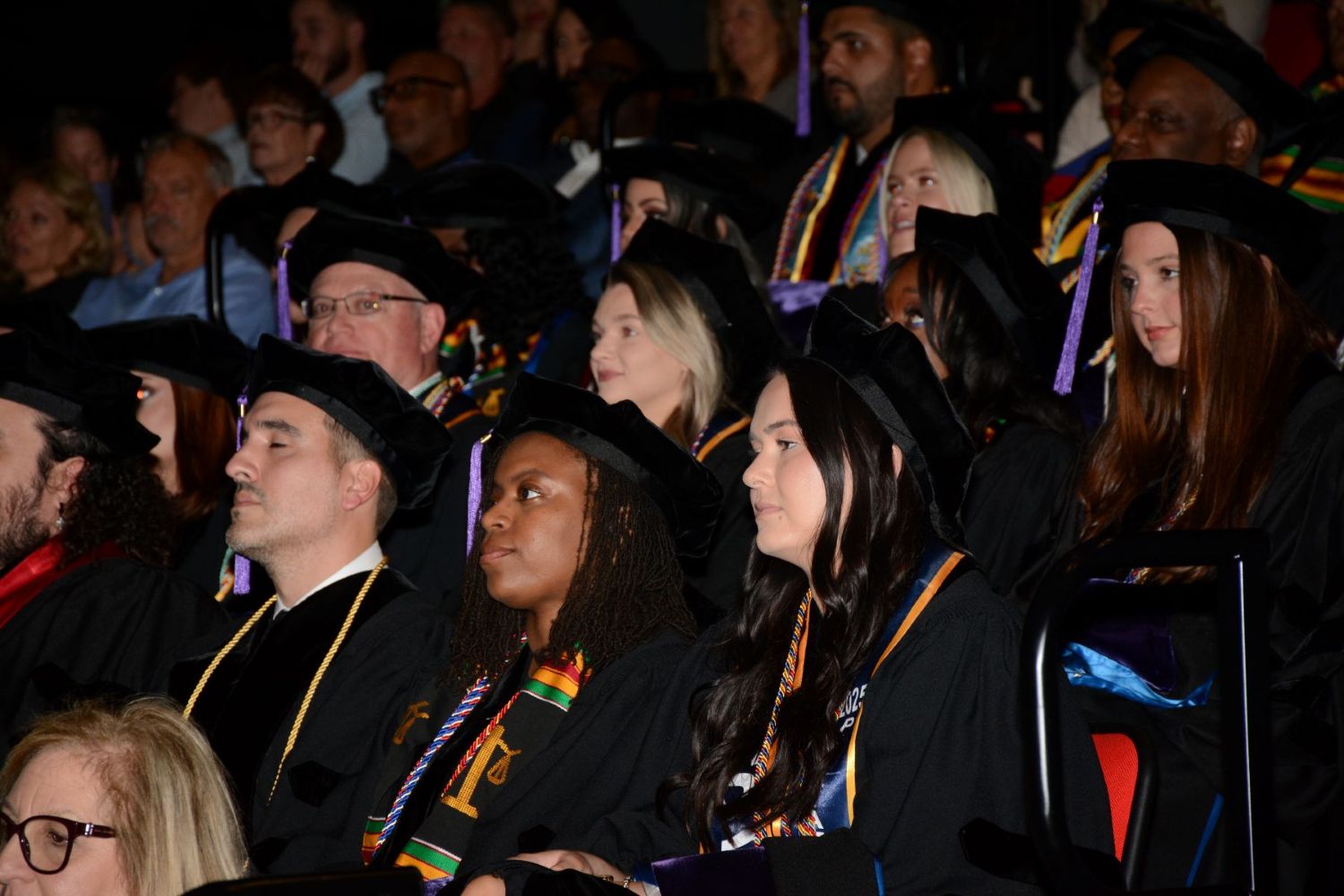
LANSING, Mich. – Graduates of Cooley Law School’s Lansing campus were honored during a commencement ceremony at the MSU Wharton Center Pasant Theatre in East Lansing on Dec. 12.

Read More
  • Cooley Law School's Lansing Campus Holds Honors Convocation

    Cooley Law School's Lansing Campus Holds Honors Convocation

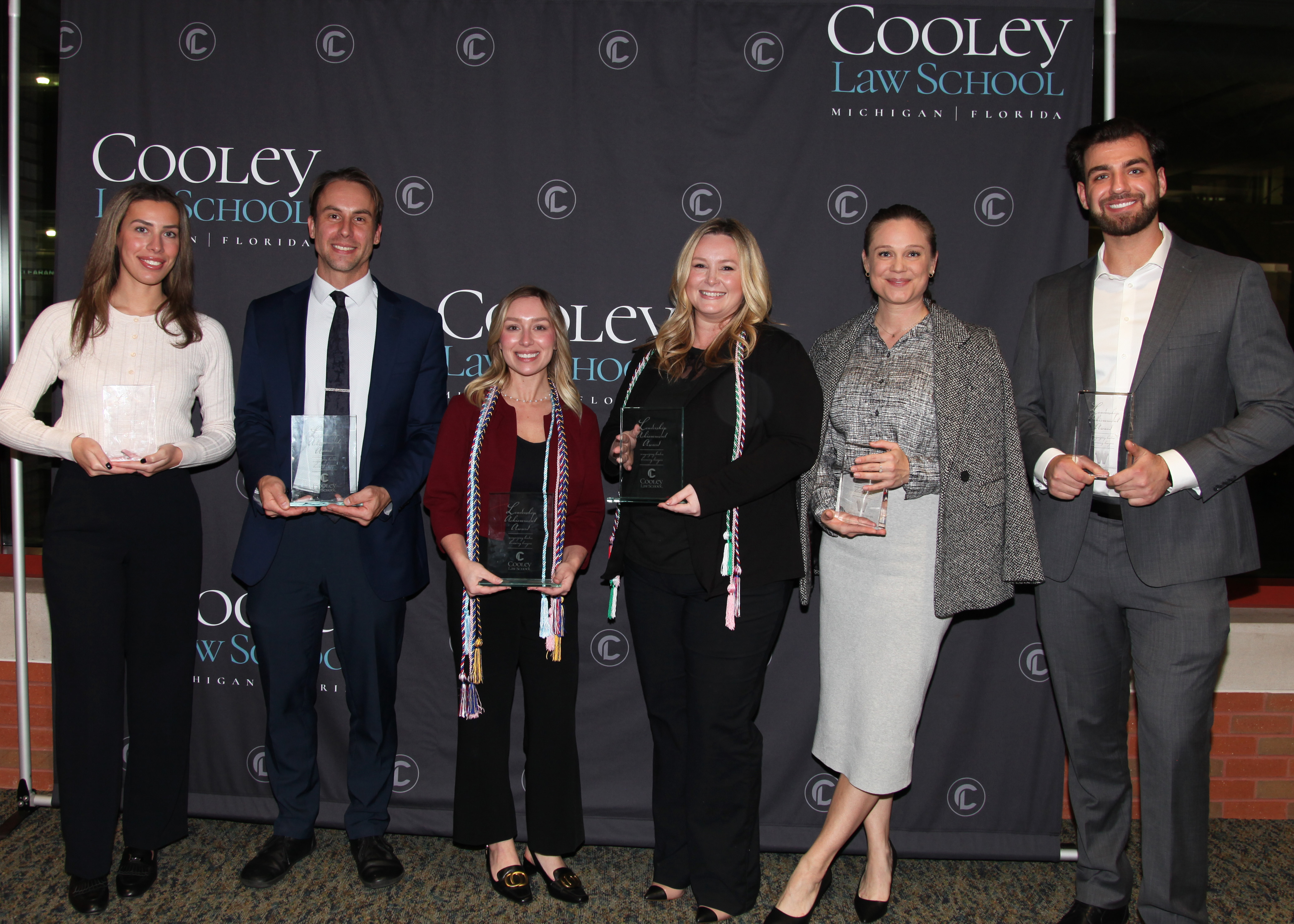
    Cooley Law School’s Lansing campus recognized students for their achievements during an honors convocation held on March 14. Adriana Burga, Norelle Miranda, and Frances Silney-Bah were each presented with the Leadership Achievement Award, which acknowledges those students who have consistently, comprehensively, and effectively provided leadership in a variety of capacities. The award is intended to be the culmination of the recipients’ participation in leadership activities at Cooley. The Alumni Association Distinguished Student Award was presented to Samantha Hulliberger. The award is given to selected graduating students based on academic accomplishments, professionalism and ethics, leadership, extracurricular activities, and post-graduation plans. The recipients are selected by the past presidents and executive committee of the Cooley Alumni Association. Recipients are presented a diploma frame from the law school. Each year, Cooley Law School’s student body selects one adjunct faculty member to be the recipient of the Frederick J. Griffith III Adjunct Faculty Award. Professor Christi Henke, who teaches Advanced Legal Methods, Conflict of Laws, and is director of the law school’s Academic Resource Center was presented the award, which was established in memory of Rick Griffith, who taught as an adjunct for nearly two decades until he passed away at the age of 52. The award is presented in recognition of a member of the adjunct faculty whose service best reflects the character and attributes of Griffith: dedication to the law school, excellence in teaching, passion for persuasive advocacy, compassion for law students and optimism about life and the future of legal education. Originally from Northridge, California, Burga earned her bachelor’s degree from Pepperdine University. While at Cooley she was selected as a Dean's Fellow and was a member of the Moot Court Board, Organization of Women Law Students, Women Lawyers Association of Michigan, and the International Law Society. Burga also served as a graduate assistant and as a grade appeals magistrate. During the convocation she was also presented with the Law Review John D. Voelker Award. Miranda, who is originally from Bacoor, Philippines, earned her bachelor’s degree from Saint Mary’s College of California. While at Cooley, Miranda served as president of the International Law Society, chairperson of the Mock Trial Board, associate editor of the Cooley Law Review, senator for the Student Bar Association, and secretary for the Health Law Society. Additionally, she served as a member of the Black Law Students Association, Organization of Women Law students, and Moot Court Board. Miranda was also presented with the Student Bar Association (SBA) Distinguished Student Award, the SBA Fitzgerald Award, and the SBA Robert E. Krinock Memorial Award. Silney-Bah of Columbia, Missouri earned her bachelor’s degree from the University of Missouri-Columbia. She was vice president of the Black Law Students Association, vice president and treasurer of the International Law Society. Silney-Bah also served as a member of the Moot Court National team and board member, was a teaching assistant, and participated in Cooley Volunteer Corps. Hulliberger is from Lansing, Michigan and earned her bachelor’s degree from Calvin University. She is currently part of the Air Force ROTC program and will be sworn in as an officer following graduation from law school. While at Cooley, Hulliberger served as president of the Student Bar Association and managing articles editor for the Law Cooley Review. She competed on the National Moot Court Team, worked as a teaching assistant for Criminal Procedure, and served on the law school’s Grade Appeals Board. (L-R) Norelle Miranda, Adriana Burga, and Frances Silney-Bah were each presented with the Leadership Achievement Award during Cooley Law School’s recent Honors Convocation. The Alumni Association Distinguished Student Award was presented to Samantha Hulliberger during Cooley Law School’s March 14 Honors Convocation. Cooley Law School Professor Christi Henke, who teaches Advanced Legal Methods, Conflict of Laws, and is director of the law school’s Academic Resource Center, was presented the Frederick J. Griffith III Adjunct Faculty Award. Mar 20 2024

  • Cooley Law School Professor Emeritus Joseph Kimble Recognized By TopLaw for Legal-Writing Article

    Cooley Law School Professor Emeritus Joseph Kimble Recognized By TopLaw for Legal-Writing Article

    Joseph Kimble, a Distinguished Professor Emeritus at Cooley Law School, has been recognized by TopLaw for his article Minimize Prepositional Phrases. Question Every of (Part 1). The article received an inaugural TopLaw 50 Award for 2024. It was a top-10 pick — as measured by reader clicks — within its Litigation World newletter Pick of the Week features. Litigation World, one of TopLaw’s five newsletters, has nearly 9,000 subscribers and covers civil litigation, including topics like legal writing. Kimble’s article, published in Judicature by Bolch Judicial Institute at Duke Law School in Summer 2023, examines unnecessary prepositional phrases. In his article, Kimble writes: “They are, in my view, the prime cause of sentence-level verbosity in legal writing. And the prime offender is of-phrases—hence my advice to question every ‘of.’ Naturally, not all prepositional phrases can be eliminated—perhaps most of them can’t be—but tight prose minimizes them.” Kimble offers three techniques (with examples) to minimize prepositional phrases: Use a possessive form Change the prepositional phrase to an adjective Cut the prepositional phrase entirely Kimble said of the award: “That article was actually the first of a two-parter in a column I do for Judicature called ‘Redlines.’ In the second part, I offered two more techniques: “liquidate zombie nouns” and “use the active voice” (with certain exceptions). It’s nice to see that readers found the advice useful. Let’s hope that they follow it—for the sake of their own readers.” “Thanks to Hollywood, people think litigators spend more time in court than they actually do,” said TopLaw Publisher and Lawyer Neil J. Squillante. “In reality, litigators spend much of their time writing. This explains why Professor Kimble’s excellent article on minimizing prepositional phrases struck a chord with TopLaw subscribers, earning the article and its author a well-deserved TopLaw 50 Award.” All of TopLaw’s 2023 Picks of the Week from its newsletters were in contention for the TopLaw 50 Awards of 2024. Mar 14 2024

  • Cooley Law School's Health Law Society Hosts Noted Health Law Practitioner and Cooley Graduate Joe Rivet in Lansing

    Cooley Law School's Health Law Society Hosts Noted Health Law Practitioner and Cooley Graduate Joe Rivet in Lansing

    On Monday, Oct. 2, Cooley Law School Health Law Society hosted an event, featuring noted health law practitioner and Cooley Law School graduate, Joe Rivet, at the law school’s Lansing campus. Rivet, founding partner of Rivet Health Law, PLC., in Norton Shores, was joined by his law partner at the firm, Richard Chafee, also a Cooley graduate. During the event, Rivet discussed the many facets of health law and explained that health law affects everyone. He also detailed the intricacies of starting a law practice and the importance of loving your work, adding: “Where you find a problem, bring a solution.” “Joe has helped to shape the careers of many of our students,” said Christi Henke, director of Cooley Law School’s Lansing Academic Resource Center. “He serves as a great role model and mentor. It has been exciting to watch the success of his law firm.” Rivet began a career in health care at 19 when he served as a transporter in a hospital. He served as a coder, auditor, and coding compliance specialist and worked his way into leadership roles at Priority Health and Health Alliance Plan. Rivet also served as the vice president of coding compliance and audit/EMS compliance officer at R1 RCM, a Chicago-based international revenue cycle company. In July 2020, he opened his law firm, which focuses on a specialized area of health law. “It was great to see Joe Rivet return to the halls he once walked as a student, and he now provides guidance and information as a successful attorney,” said Ramon Garcia, president of Cooley’s Health Law Society. Rivet is a member of the State Bar of Michigan, the U.S. District Courts for the Eastern and Western Districts of Michigan, the State Bar Provider Subcommittee, and reimbursement chair for the Michigan Group Medical Association. He is also a member of the American Bar Association Solo, Small Firm and General Practice Division. Rivet was designated a 2022 Power Lawyer by Lawyers of Distinction, selected as a Rising Star in 2023 by Super Lawyers, and recognized by Best Lawyers Ones to Watch in health law. In March 2023, Cooley’s Health Law Society honored Rivet with its inaugural Health Lawyer of the Year award, which was presented in partnership with the State Bar of Michigan Health Law Section. Cooley Law School graduates and law firm partners, Joe Rivet, left, and Richard Chaffee, attend a Cooley Health Law Society event on Oct. 2, 2023, at the law school’s Lansing campus. Oct 05 2023

  • Cooley Law School's Constitution Society Hosts Conversation on Textualism

    Cooley Law School's Constitution Society Hosts Conversation on Textualism

    Cooley Law School’s American Constitution Society held a discussion on textualism featuring Distinguished Professor Emeritus Joseph Kimble. Kimble’s presentation, which took place on Nov. 27, took a deeper look at how textualism and some of its so-called canons of construction affect the interpretation of statutes. Textualism focuses on the words, syntax, and structure of the text to try to derive its ordinary meaning. During the presentation, Kimble said that he is not a fan of textualism as it is practiced. “Textualism can create—and has in fact created—one-sided results,” said Kimble, who taught Research & Writing and Advanced Research & Writing during his tenure at Cooley Law School. He is now senior director of Cooley's Kimble Center for Legal Drafting. “I would, of course, want to carefully examine the text in legal documents but also bring to bear other considerations, such as legislative history, the expressed or apparent purpose, all forms of context, sensible policy, the consequences of a decision, and reasoned intuition. I believe judges should be universalists. No plausible analytical point should be off the table.” Kimble has published dozens of articles on legal writing and has written three books: “Lifting the Fog of Legalese: Essays on Plain Language;” “Writing for Dollars, Writing to Please: The Case for Plain Language in Business, Government, and Law;” and “Seeing Through Legalese: More Essays on Plain Language.” During his career, Kimble has lectured on writing to legal organizations in the United States, Canada, Europe, Mexico, Australia, New Zealand, and South Africa. Distinguished Professor Joseph Kimble speaks about textualism during a discussion hosted by Cooley Law School’s American Constitution Society on Nov. 27. Dec 01 2023

  • Cooley Law School's Tampa Bay Campus Holds Honors Convocation

    Cooley Law School's Tampa Bay Campus Holds Honors Convocation

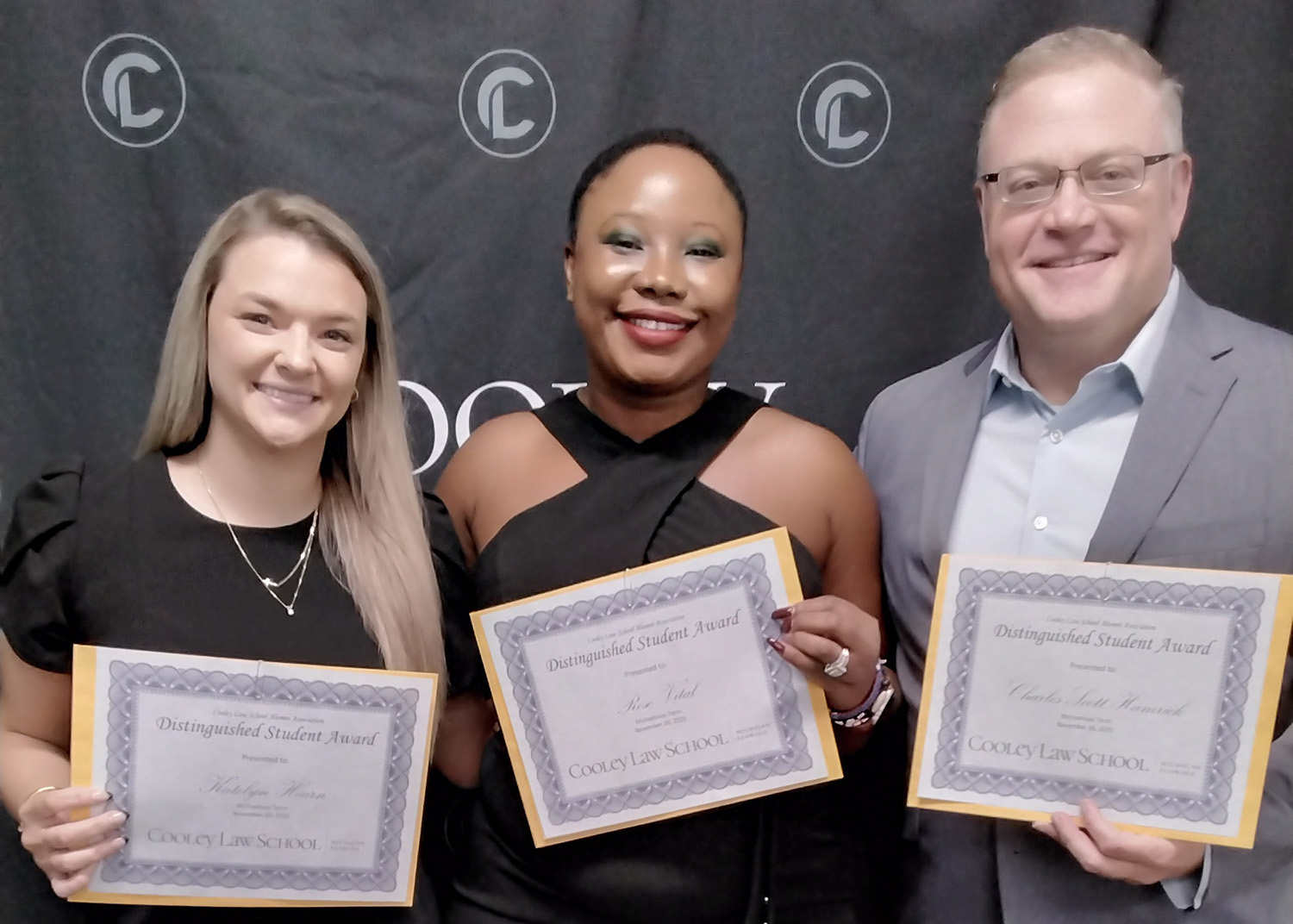
    On March 28, Cooley Law School’s Tampa Bay campus recognized students for their achievements during an honors convocation. Courtney Yonker was presented with the Leadership Achievement Award, which acknowledges those students who have consistently, comprehensively, and effectively provided leadership in a variety of capacities. The award is intended to be the culmination of the recipient’s participation in leadership activities at Cooley. Yonker, who is from Tampa, earned her bachelor’s degree from the University of Tampa. Whileat Cooley, she was selected as a Dean’s Fellow and served as Moot Court’s chairperson and chief justice. Yonker also served as a Cooley Ambassador and as a member of the Florida Association of Women Lawyers. During the convocation she was also recognized for service as the Lead Dean’s Fellow working closely with the Academic Resource Center and serving as an intermediary between the center’s faculty and staff and other Dean’s Fellows. The Alumni Association Distinguished Student Award was presented to Mya Hurwitz. The award is given to selected graduating students based on academic accomplishments, professionalism and ethics, leadership, extracurricular activities, and post-graduation plans. The recipients are selected by the past presidents and executive committee of the Cooley Alumni Association. Recipients are presented a diploma frame from the law school. Hurwitz earned her bachelor’s degree from Rollins College in Winter Park, Florida. While at Cooley, she was selected as a Dean’s Fellow and served as a teaching assistant and president of the Student Bar Association. Hurwitz was a member of the Cooley Law Review, International Legal Honor Society of Phi Delta Phi, and the Florida Association of Women Lawyers. Each year, Cooley Law School’s student body selects one adjunct faculty member to be the recipient of the Frederick J. Griffith III Adjunct Faculty Award. Professor Mustafa Ameen, who teaches Florida Criminal Practice and Florida Drunk Driving Law, and is a partner at Ameen & Shafii Attorneys at Law was presented the award, which was established in memory of Rick Griffith, who taught as an adjunct for nearly two decades until he passed away at the age of 52. The award is presented in recognition of a member of the adjunct faculty whose service best reflects the character and attributes of Griffith: dedication to the law school, excellence in teaching, passion for persuasive advocacy, compassion for law students, and optimism about life and the future of legal education. (L-R) Shameka Conwell, Katherine Semone, Distinguished Student Award winner Mya Hurwitz, and Rob Johnson. (L-R) National Competition Teams-Chester Bedell Mock Trial Competition Team Members: Left to right: Jaxon Parker, Steve Chandler, Safa Kudia, Alan Bangiev, Stephanie McKinney, Michelle Guzman, and Karly Hudson. Thee Yonker family celebrates daughter Courtney Yonker's accomplishments. Apr 01 2024

  • Cooley's Tampa Bay Campus Holds Honors Convocation

    Cooley's Tampa Bay Campus Holds Honors Convocation

    On Nov. 16, Cooley Law School’s Tampa Bay campus held its fall term honors convocation recognizing students for their achievements. Brianna Allen was presented with the Leadership Achievement Award, which acknowledges those students who have consistently, comprehensively, and effectively provided leadership in a variety of capacities. The award is intended to be the culmination of the recipients’ participation in leadership activities at Cooley. Originally from Cincinnati, Ohio, Allen earned her bachelor’s degree from the University of South Florida. While at Cooley she served as vice president and PR director for the Mock Trial Board, secretary of the Moot Court Board, and senator for the Student Bar Association. The Alumni Association Distinguished Student Award was presented to Steven Jimenez. The award is given to selected graduating students based on academic accomplishments, professionalism and ethics, leadership, extracurricular activities, and post-graduation plans. The recipients are selected by the past presidents and executive committee of the Cooley Alumni Association. Recipients are presented a diploma frame from the law school Jimenez, who is originally from Santa Maria, California earned his bachelor’s degree from the University of Phoenix. He served as president of the Cooley Military Veterans Law Student Association, and alumni outreach chair for the Mock Trial Board. He is a student member of the American Bar Association and the California Bar Association, and associate member of the Phi Delta Phi Legal Honor Society. Nov 20 2023

  • Cooley Law School Student Organization Hosts Juneteenth Freedom Celebration

    Cooley Law School Student Organization Hosts Juneteenth Freedom Celebration

    Cooley Law School’s Black Law Students Association hosted Juneteenth Freedom on June 13, featuring Hillsborough County Judge Daryl Manning as the honorary speaker. During the event, Manning spoke about becoming part of the Florida Bar Association and remaining a member. “You need to begin your application to the Florida Bar now because it typically takes about six months for the initial review,” he told the law students. “If your application is incomplete or you have character and fitness issues, it will take longer.” Manning, a native of Queens, New York, has been a Hillsborough County judge in Tampa since 2015. He presides over a drug court division and a unified family court division. Previously, Manning was a practicing and supervising attorney in the Tampa Office of the Florida Attorney General for 16 years, where he appeared in state and federal trial and appellate courts. “Three of the most difficult bar examinations are given in Florida, California and New York,” Manning said during the evening. “You need to work hard if you intend to practice in any state, but especially these three.” He added: “Good character and fitness are crucial for the practice of law. Don’t spend the time and money to become a lawyer and fail to maintain your license. Honesty and integrity are critical traits for lawyers to possess.” Manning obtained a master of laws degree from the Army Judge Advocate Legal Center and School at the University of Virginia in Charlottesville, Virginia; Juris Doctor from St. John’s University School of Law in Queens; and his bachelor of arts degree from the University of South Carolina, in Columbia, South Carolina. He was a Judge Advocate (JAG) in the U.S. Army and served several tours in support of the Global War on Terrorism in Iraq, Afghanistan, Saudi Arabia and Kuwait before retiring as a lieutenant colonel in 2015 after 30 years on active duty and in the reserves. Jun 15 2023

  • WMU-Cooley Law School Hosts Law Day Celebration

    WMU-Cooley Law School Hosts Law Day Celebration

    On Monday, May 1, WMU-Cooley Law School celebrated Law Day 2023 with a virtual event, featuring Michigan Supreme Court Chief Justice Elizabeth T. Clement. Clement, who was the keynote speaker for WMU-Cooley’s event, shared her perspective on this year’s Law Day theme, “Cornerstones of Democracy: Civics, Civility, and Collaboration,” and its importance in the legal community. “When you’re talking about democracy, these are the three pillars – the foundation of democracy,” said Clement. “The key message I want you to take away from this discussion today and Law Day is that we can’t do any of this work without each and every one of you. We need all the stakeholders in Michigan’s justice system, including law students, future lawyers, and leaders, to be engaged, contributing your experiences, expertise and ideas. Whether it’s access to justice, data transparency or juvenile justice, my goal is for Michigan to be a national leader, and we need you to help us make that vision a reality.” Clement spoke about how each pillar – civics, civility and collaboration – play an important role in today’s judicial system. Pictured: Justice Elizabeth Clement “Civics is about how we inform and educate Michigan residents about their constitutional rights, as well as the resources courts have to offer for everyone that interacts with the judiciary system, and the duties and responsibilities that go along with those rights,” she said. When sharing about civility, Clement explained that civility is defined as a formal politeness or courtesy – treating one another with dignity and respect. “For me, this applies to every aspect of court operations because courts always need to focus on treating the people we serve with dignity and respect,” she said. “People come to court on the most difficult days of their lives. They deserve not just a fair playing field, but one where they are welcomed, valued and supported. I really feel that civility in the judiciary system starts at the very top. We have worked very, very hard to improve the civility, not just on our own court, but in all of the courts around the state of Michigan.” Clement said she looks at collaboration as the act of working together toward a common purpose. “In the judiciary, we definitely know how to lead, but we also understand that we accomplish so much more when we collaborate with stakeholders,” she said. “We’re really trying to be thoughtful that what we’re here to do is to serve the public, and the best way to do that is to collaborate with everyone that’s involved in the judicial branch and make sure we’re responsive to what’s being expected and asked of us.” On Law Day, students and staff at WMU-Cooley will join others throughout the country in rebuilding trust in the nation’s institutions, respect for one another, and demonstrate that WMU-Cooley is committed to being an agent for positive change in communities and the legal profession. “Law Day is a national day set aside to celebrate the rule of law,” said WMU-Cooley Law School Associate Dean Tonya Krause-Phelan. “It provides us with the opportunity to understand how law and the legal process protect our liberty, strive to achieve justice and contribute to the freedoms that all Americans share.” May 05 2023

  • Cooley Innocence Project and Exoneree Gilbert Poole to Participate in Riverwalk Theatre Talkback with 'Exonerated' Cast

    Cooley Innocence Project and Exoneree Gilbert Poole to Participate in Riverwalk Theatre Talkback with 'Exonerated' Cast

    Cooley Law School’s Innocence Project will participate in Riverwalk Theatre’s Talkback events throughout the theater’s production of “The Exonerated.” Tracey Brame will lead the talkback discussion on Saturday, Feb. 17, while Marla Mitchell-Cichon will lead the discussion on Saturday, Feb. 24. Brame is the director of Cooley’s Innocence Project and associate dean of experiential learning and practice preparation, while Mitchell-Cichon is a distinguished professor emeritus, and counsel to the Cooley Law School Innocence Project. “The Exonerated,” by Jessica Blank and Erik Jensen, tells the stories of five men and a woman, all of whom were wrongly sentenced to death for murders that they did not commit. Between them, they spent over 100 years on death row watching their fellow inmates die in the electric chair, while awaiting their own imminent deaths. The show is directed by Alan Greenberg and runs Feb. 15-18 and 22-25 at Riverwalk Theatre, 228 Museum Dr., Lansing. Brame (right) and Mitchell-Cichon (left) will lead the post-performance Talkback discussion on Feb. 17 and Feb. 24. The show will start at 8 p.m., with the talkback at about 9:30 and conclude at or shortly before 10 p.m. Cooley Innocence Project exoneree Gilbert Poole (center), who spent 32 years behind bars for a crime he did not commit, will join the discussions for both performances. David Williams (back row) was a past student and attorney with the Cooley Innocence Project. The Cooley Innocence Project is part of the Innocence Network which has been credited with the release of over 375 wrongfully convicted prisoners, mainly through the use of DNA testing. It is the only post-conviction DNA innocence organization in Michigan. Since its inception, the office has screened over 6,000 cases and is responsible for the exoneration of nine individuals: Kenneth Wyniemko (2003), Nathaniel Hatchett (2008), Donya Davis (2014), LeDura Watkins (2017), Kenneth Nixon (2021), Gilbert Poole (2021), Corey Quentin McCall (2021), George DeJesus (2022), and most recently, Louis Wright (2023), who spent 35 year wrongfully imprisoned. Additionally, the Cooley Innocence Project also helped to exonerate Lacino Hamilton, Ramon Ward, Terance Calhoun, and Crystal Mulherin. About Cooley Law School: Cooley Law School was founded on a mission of equal access to a legal education and offers admission to a diverse group of qualified applicants across the country. Since the law school's founding in 1972, Cooley has provided a modern legal education to more than 21,000 graduates, teaching the practical skills necessary for a seamless transition from academia to the real world. An independent, non-profit law school, accredited by both the American Bar Association and the Higher Learning Commission of the North Central Association of Colleges and Schools, Cooley holds classes year-round at its Michigan and Florida campuses. Feb 09 2024