
Skip to content

Reda Taleb’s Life’s Work: Turning Pain into Purpose — and Giving It Back to Dearborn

Reda Taleb’s Life’s Work: Turning Pain into Purpose — and Giving It Back to Dearborn

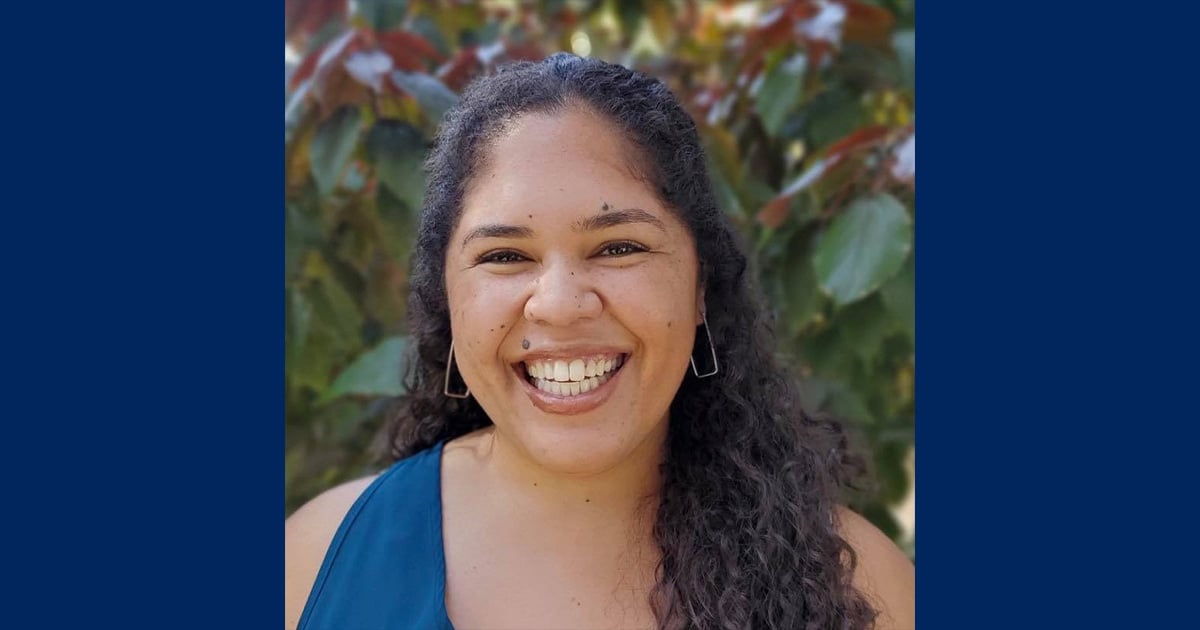
When Reda Taleb (McLean Class, 2015) talks about “giving back,” she isn’t just reciting a slogan — she’s living by example. The daughter of immigrants from Bint Jbeil, Lebanon, Taleb’s parents, along with her six older siblings, laid roots in Dearborn’s south end, an area known for its pollution-emitting factory smoke stacks and community of Arab Americans seeking the “American Dream.”

Read More
  • Tips for Improving Multicultural Communication
    Tips for Improving Multicultural Communication

    Tips for Improving Multicultural Communication

    Have you ever said something and discovered that your listener felt attacked, when that was not your intent? Have you ever had someone say something to you where you felt misunderstood, stereotyped, or disrespected? When those kinds of mis-communications occur, how do you respond? When the other person is from a different culture from you, have you ever felt like the mis-communication is even more fraught?

  • Law student Heather Silcott honored with SBM Animal Law Award
    Law student Heather Silcott honored with SBM Animal Law Award

    Law student Heather Silcott honored with SBM Animal Law Award

    Cooley Law student Heather Silcott knew from the moment she rescued a labradoodle named Bruno from an auction that animals needed lawyers.

  • Confusion: Bad for Contracts, Good for Students
    Confusion: Bad for Contracts, Good for Students

    Confusion: Bad for Contracts, Good for Students

    In the middle of their study of Contract law, students encounter a cluster of cases dealing with when courts should grant some form of relief to parties who unknowingly enter into contracts beset by misunderstanding, mistake, or ignorance. I call this cluster “the Law of Confusion.” Reading the cases, students are at least as confused as were the parties to the lawsuits that they are being asked to study.

  • Reflections On A Career: 5 Lessons Learned
    Reflections On A Career: 5 Lessons Learned

    Reflections On A Career: 5 Lessons Learned

    I retired in December, 2021, and I had the honor of being asked to present a lecture on what I learned from my career. In that lecture, I discussed five "lessons" I have learned that made my career more productive and more enjoyable. You can watch the 30-minute lecture in the video, or if you want the “Cliff Notes” version, here are the 5 lessons below - Cooley Professor Emeritus Kimberly E. O'Leary

  • KISS: Simple Ways to Increase Your Article’s Impact
    KISS: Simple Ways to Increase Your Article’s Impact

    KISS: Simple Ways to Increase Your Article’s Impact

    I have previously blogged about ways to boost an article’s readership. Since then I have learned of a really simple additional way. We all know that to increase readability, use short words and short sentences. It turns out that using a short title for your article can increase the likelihood that it will be read. And cited by others.

  • What Should Be Done About Michigan's No-Good, Very Bad Way of Selecting Supreme Court Justices?
    What Should Be Done About Michigan's No-Good, Very Bad Way of Selecting Supreme Court Justices?

    What Should Be Done About Michigan's No-Good, Very Bad Way of Selecting Supreme Court Justices?

    THE PAST The "Looking Back: 1930s" article in the January 2022 Michigan Bar Journal concludes by briefly noting "a failed constitutional amendment which would have moved Michigan away from an elected judiciary." The ballot measure would have instituted non-partisan appointment of Michigan’s Supreme Court justices. Since that 1938 defeat, the State Bar has initiated or supported petition drives to put the question of non-partisan judicial selection back on the ballot three more times.

  • Shining Star: Cooley Law school Student Graduated With A Perfect 4.0 GPA
    Shining Star: Cooley Law school Student Graduated With A Perfect 4.0 GPA

    Shining Star: Cooley Law school Student Graduated With A Perfect 4.0 GPA

    Mina Woodard’s original career goal was to become a math teacher, but she switched to criminal justice studies after transferring from the University of Louisiana to Michigan State University in her second year. “I wanted to have a career where I felt like I could help people,” she says. “I enjoyed learning about how the legal system works and the reasons behind why people commit crimes. Studying criminal justice was the beginning of my interest in law.” The seeds of her future career were sown when she took a law class at MSU and found it fascinating. After giving birth to her daughter Skye during her junior year of college, Woodard didn’t give much thought to continuing education—but after graduation, struggled to find a career that interested her. Three years as a Client Service Specialist at Jackson National Life in Lansing was a valuable experience, but she recognized it wasn’t what she was meant to do long-term.

  • Cooley Graduate Janelle Benjamin is Helping Employers “Make it Easy to be Equitable”
    Cooley Graduate Janelle Benjamin is Helping Employers “Make it Easy to be Equitable”

    Cooley Graduate Janelle Benjamin is Helping Employers “Make it Easy to be Equitable”

    Cooley Law School 2005 graduate Janelle Benjamin is the founder and CEO of the company All Things Equitable. Benjamin, located in Toronto, Ontario, works with organizations and companies all over the world. Her consulting work focuses on diversity and inclusion in the workplace. She helps employees from historically marginalized groups feel safer at work, and she helps employers figure out how to create diverse and safe workplaces that are fair and equitable. She does her work by speaking, interviewing, conducting focus groups, surveys, and training sessions. Benjamin started the company in 2020, pulling together more than 15 years of skills acquired through her work on the staff of high level policy makers in Human Rights and Fairness government commissions. She earned her J.D. with a focus on International Law, ADR, and Litigation. She believes she is the only firm in Toronto that focuses on all historically marginalized groups – there are consultants on racial equity, or accessibility equity, or LGBTQI equity, for example. She helps companies create fairness for all its employees by examining such issues as implicit bias and micro-aggressions, but also explicit bias and dismantling sexist, racist, ableist and other practices that are a barrier to fairness. She credits some of her own experiences of discrimination and micro-aggressions in the workplace with helping her recognize and validate the experiences shared by marginalized employees. She credits her policy experience with helping her problem-solve with employers. After the events of the summer of 2020, including the shooting of George Floyd, Ms. Benjamin realized she wanted to do more. She also realized her own race and gender posed challenges to being promoted within corporate culture. With the support of many people with whom she had worked, who advised her that she had the perfect skill set to take action to improve employment settings, she launched her own business and has been busy ever since.

  • Katie Stanley: When you help a client, you aren’t just helping them, you're helping others.
    Katie Stanley: When you help a client, you aren’t just helping them, you're helping others.

    Katie Stanley: When you help a client, you aren’t just helping them, you're helping others.

    You might say that Katie Stanley started law school at age 13. She was, of course, too young to actually enroll in law classes, but that’s when she began reading the legal textbooks for her dad, Mike Stanley, who’d enrolled at Cooley as a blind student. Katie was soon hooked on the material, setting the stage for a career in the law as a means for helping people.