Skip to content

Reda Taleb’s Life’s Work: Turning Pain into Purpose — and Giving It Back to Dearborn

Reda Taleb’s Life’s Work: Turning Pain into Purpose — and Giving It Back to Dearborn

When Reda Taleb (McLean Class, 2015) talks about “giving back,” she isn’t just reciting a slogan — she’s living by example. The daughter of immigrants from Bint Jbeil, Lebanon, Taleb’s parents, along with her six older siblings, laid roots in Dearborn’s south end, an area known for its pollution-emitting factory smoke stacks and community of Arab Americans seeking the “American Dream.”

Read More
  • Name Those Judges!
    Name Those Judges!

    Name Those Judges!

    Blog author Otto Stockmeyer, Distinguished Professor Emeritus, was a Commissioner and Research Director at the Michigan Court of Appeals for 12 years before joining the Cooley Law School faculty in 1977. His role in the formation of the court’s research staff is described here.

  • Corporate Annual Reports - Plain Language's Last Frontier?
    Corporate Annual Reports - Plain Language's Last Frontier?

    Corporate Annual Reports - Plain Language's Last Frontier?

    Back in 1979, Rudolf Flesch brought the plain-language movement to the public’s attention with his book How to Write Plain English: A Book for Lawyers & Consumers. Since then, plain language has made great progress in the fields of law and business. It’s all chronicled in Joseph Kimble’s 2012 book Writing for Dollars, Writing to Please: The Case for Plain Language in Business, Government, and Law.

  • The Importance of Definitions
    The Importance of Definitions

    The Importance of Definitions

    New students will quickly learn that first-term courses do not include Vocabulary 101. Rather, students are expected to master the law’s terminology on their own, by looking up every word in their assigned cases that they don’t understand.

  • The Real Truth About Law School
    The Real Truth About Law School

    The Real Truth About Law School

    First, in the interest of full disclosure, I am an academic paid by way of student tuition dollars. I make a good living doing what I do, but I teach because I love the challenge and the students and faculty I work with. If I wished, I could leave my current position and make more money in private practice if I went that route. It might take me a couple years to get up and running, but I have worked in sales on commission very successfully in the past and I know how to produce income were that my only goal in life.

  • Law School’s Police Militarization and Legal Consequences Conversation to Continue in Round Two
    Law School’s Police Militarization and Legal Consequences Conversation to Continue in Round Two

    Law School’s Police Militarization and Legal Consequences Conversation to Continue in Round Two

    This blog was originally published on Nov 5, 2015 Blog author Professor Tonya Krause-Phelan is WMU-Cooley Law Review’s Legal Consequences of Police Militarization Symposium moderator. Professor Kraus-Phelan teaches Criminal Law, Criminal Procedure, Defending Battered Women, Criminal Sentencing, and Ethics in Criminal Cases. She assists with the West Michigan Defenders Clinic and coaches national mock trial and moot court teams, and is frequently appears as a commentator on numerous radio, television, print, and internet media sources regarding criminal law and procedure issues.

  • Bioethics conference sparks collaboration and important conversations
    Bioethics conference sparks collaboration and important conversations

    Bioethics conference sparks collaboration and important conversations

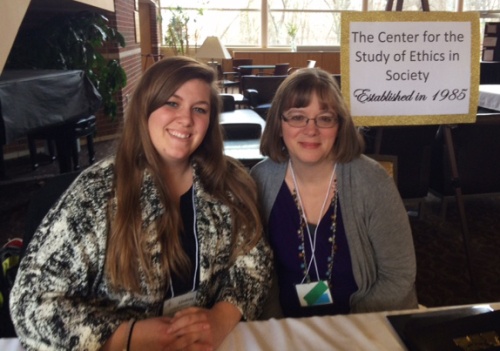
    This blog was originally published on May 20, 2016. On March 17 and 18, 2016, Western Michigan University’s Center for the Study of Ethics in Society presented a conference called “Bioethics: Preparing for the Unknown.” Cooley Law School professors and law students were well-represented among the speakers, presenting on topics such as informed consent, medical quarantines, youth health care, and drug addiction. The conference sparked important conversations surrounding the theme of uncertainty, a fundamental reality in bioethics. The study of bioethics brings to the forefront concepts of right and wrong, good and bad; blending and blurring the areas of philosophy, theology, history, law, and medicine.

  • The Flint Water Crisis: Creating Continuity in Chaos
    The Flint Water Crisis: Creating Continuity in Chaos

    The Flint Water Crisis: Creating Continuity in Chaos

    The Flint water crisis is now in the fourth year as slowly but surely, old, lead-laden water lines are replaced across the city. Looking back to April 2014 when the city switched from the city of Detroit’s water system to using water from the Flint River, it’s easy to see how circumstances and decisions conspired to create the disaster. Back then, though, no one saw it coming until it was too late. That’s what they call a “black swan” event.

  • Confusion: Bad for Contracts, Good for Students?
    Confusion: Bad for Contracts, Good for Students?

    Confusion: Bad for Contracts, Good for Students?

    Blog contributor Otto Stockmeyer is a Cooley Law School Distinguished Professor Emeritus. This is another in his series of posts that take a fresh look at famous cases.

  • Cooley Professor Jeffrey Swartz: Assuring Accurate Legal Expert Commentary for ABC Action News
    Cooley Professor Jeffrey Swartz: Assuring Accurate Legal Expert Commentary for ABC Action News

    Cooley Professor Jeffrey Swartz: Assuring Accurate Legal Expert Commentary for ABC Action News

    This blog was originally published on May 19, 2015. As much as every news affiliate is looking for a story, reporters and news sources are always in need of someone who can take personal opinion out of a story and replace it with a professional and objective account of a story – no matter how controversial. Many also can argue that literally every story has the potential to have a legal viewpoint.